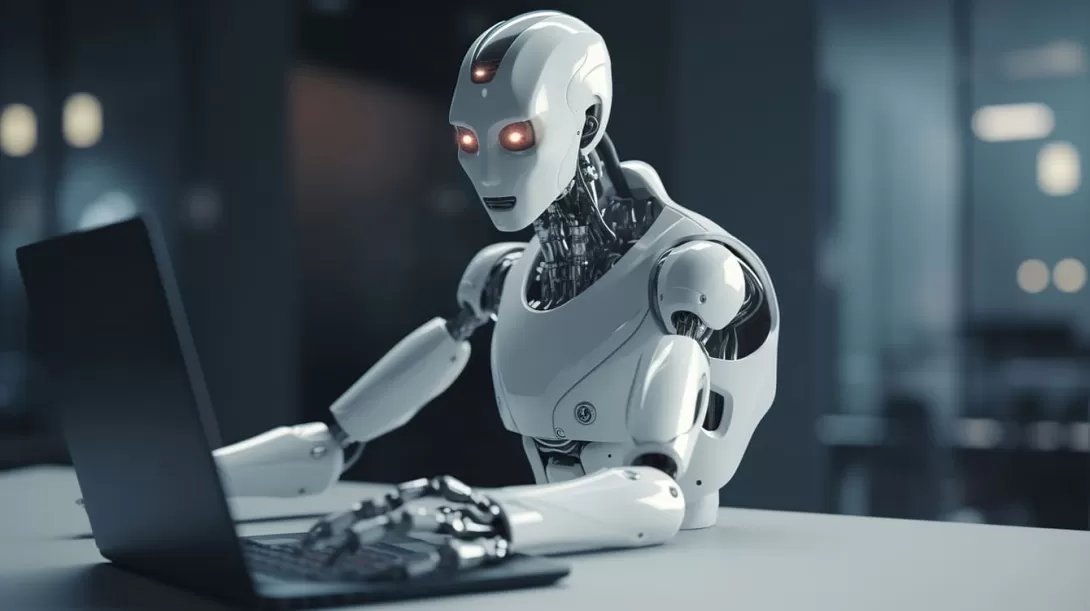
Artificial intelligence, or AI, is no longer a thing of science fiction. It's here, and it's changing how we interact with technology and the world around us. From self-driving cars to chatbots that can answer your questions, AI is rapidly changing the world around us. One question on many people's minds is: "Will AI take my job?" It's a valid concern. The idea of robots replacing human workers has been the focus of science fiction for decades. But how close are we to that reality? This blog post will explore the impact of AI on the job market, looking at both the potential risks and the exciting opportunities that come with this technological revolution.
The Rise of the Machines (and What They Can Do)
AI is already transforming many industries. Think about online shopping. AI powers the recommendation systems that suggest products you might like. This is a form of collaborative filtering, where AI analyzes your past behavior and similar users' choices to predict future preferences. It's also used in customer service, where chatbots can answer basic questions and solve simple problems. Companies like Intercom and Zendesk use AI-powered chatbots to handle routine inquiries, freeing up human agents for more complex issues. In manufacturing, robots controlled by AI are used to assemble products more quickly and efficiently. Companies like Amazon and Tesla utilize robotics extensively in their warehouses and factories.
These are just a few examples of how AI is being used today. As AI technology continues to advance, it's likely to take on even more complex tasks. Some experts predict that AI could eventually automate a wide range of jobs, from truck drivers and cashiers to lawyers and doctors. A 2017 McKinsey Global Institute report estimated that between 400 million and 800 million jobs could be displaced by automation by 2030.
The Job Market Shake-Up: What's at Risk?
It's true that some jobs are more susceptible to automation than others. Jobs that are repetitive, predictable, and require little human interaction are the most likely to be affected. Think about data entry clerks or assembly line workers. AI can often perform these tasks faster, cheaper, and with fewer errors than humans. A study by Ball State University found that automation has already eliminated thousands of manufacturing jobs in the US.
However, it's important to remember that AI is not good at everything. It struggles with tasks that require creativity, critical thinking, and emotional intelligence. Jobs that involve complex problem-solving, interpersonal skills, and adaptability are less likely to be fully automated.
The Opportunity in Change: New Jobs on the Horizon
While AI may displace some jobs, it's also creating new ones. Just as the invention of the computer led to new careers in software development and IT, the rise of AI is creating demand for AI specialists, data scientists, and AI trainers. The World Economic Forum's Future of Jobs Report suggests that many new roles will emerge in areas like AI development, data science, and cybersecurity.
Furthermore, AI can free up humans from tedious and repetitive tasks, allowing them to focus on more meaningful and creative work. Imagine a doctor who no longer has to spend hours reviewing patient files, or a teacher who can use AI tools to personalize lessons for each student.
Adapting to the Age of AI: Skills for the Future
The key to navigating the changing job market is to be adaptable and develop skills that are difficult for AI to replicate. These include:
- Critical Thinking: The ability to analyze information, identify problems, and come up with creative solutions.
- Creativity: The ability to generate new ideas, think outside the box, and innovate.
- Communication: The ability to clearly and effectively communicate with others, both verbally and in writing.
- Collaboration: The ability to work effectively with others as part of a team.
- Emotional Intelligence: The ability to understand and manage your own emotions, as well as the emotions of others.
The Human Touch: Why We Still Matter
While AI is incredibly powerful, it's important to remember that it's just a tool. It's created by humans, and it's used by humans. AI can't replace the human touch – the empathy, compassion, and understanding that are essential in many aspects of our lives. Studies have highlighted the importance of human skills in the age of AI.
Think about a nurse caring for a sick patient, or a teacher inspiring a student to learn. These are human interactions that AI simply can't replicate. We still need human connection, and that's something that AI can't take away.
The Future is a Partnership: Humans and AI Working Together
The future of work is likely to involve a partnership between humans and AI. Instead of viewing AI as a threat, we should see it as an opportunity to work together and achieve more than we ever could alone. By combining our unique human skills with the power and efficiency of AI, we can create a better future for everyone. It's not about robots versus humans; it's about humans and robots working together. The question isn't "Will AI take my job?" but rather "How can I use AI to make my job better?" That's the question we should all be asking.
Comments